

Fraud & Security Center
EVENTS | NEWSLETTERS | FRAUD & SCAMS
Protecting your personal and financial information starts with knowing what to watch for. Review current scam alerts, learn about common types of fraud, and find steps you can take to help protect your accounts and personal information.
If you have questions about activity on your account or receive a suspicious phone call, text, email or letter claiming to be from Community Credit Union of Florida, please contact us.
Think You've Been Targeted by a Scam?
Do not provide personal or account information. If someone contacts you unexpectedly claiming to be from CCU Florida and you are unsure whether the communication is legitimate, hang up or stop responding.
Contact CCU Florida directly at 321.690.2328 or 800.690.2338.
Current Scam Alerts
Fraud tactics change frequently. Review the latest scams and suspicious activity reported to CCU Florida.
CCU Florida Phone Spoofing Scam
Updated June 4, 2026
CCU Florida has been made aware of fraudsters impersonating the CCU Fraud Department. The call may appear to come from CCU Florida's phone number and the caller may claim they are attempting to verify suspicious debit card transactions or a pending wire.
This is a scam.
While CCU Florida may contact you regarding suspected fraudulent activity, we will never ask you to provide:
- Your User ID or username
- Your password
- Authentication or one-time verification codes sent by text or email
- Your PIN
- Your card CVV/security code
If you are unsure about a communication, hang up and call your local branch or Member Services at 321.690.2328.
Jury Duty Scam
Updated January 8, 2026
CCU Florida has been made aware of scammers contacting people by phone or text and claiming they failed to appear for jury duty.
Do not provide personal or financial information or make a payment in response to an unexpected call or text.
If you receive this type of communication, hang up. You may independently contact your local Clerk of Court to confirm your jury duty status.
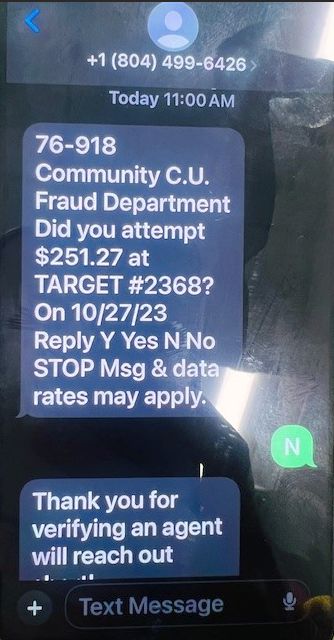
Fraudulent Debit Card Text Messages
Fraudulent text messages may ask members to verify debit card transactions. After responding, the member may be directed to call a phone number or may receive a follow-up phone call requesting account information.
These messages can look similar to legitimate fraud alerts. Legitimate CCU Florida fraud text messages will instruct you to contact 1.855.961.1602.
CCU Florida will never ask you to provide your PIN, password or full card number in response to an unexpected text message.
If you receive a suspicious text, contact Member Services at 321.690.2328 or 800.690.2338.
Debit & Credit Card Verification Code Scam
A scammer may call from what appears to be CCU Florida's phone number and claim there has been suspicious activity on your card. The caller may already know some of your card information and then send a one-time verification code to your phone.
Never provide the verification code to the caller. The code could be used to gain unauthorized access to your card or register it with a digital wallet.
If someone claiming to be from CCU asks you for a verification code, hang up and contact Member Services directly at 321.690.2328.
Protect Yourself from Fraud
Fraudsters often create a sense of urgency or impersonate a trusted organization to convince you to provide sensitive information. Even if a phone number, email address or message appears legitimate, stop and verify the communication independently.
CCU Florida Will Never Ask You for These Items
- Online Banking User ID or username
- Online Banking password
- PIN
- CVV/security code from the back of your card
- One-time authentication or verification codes
Remember: Caller ID can be spoofed. A call displaying CCU Florida's name or phone number does not guarantee that the caller is actually from CCU Florida.
If you're unsure, hang up and call us directly using a trusted phone number.
Simple Ways to Stay Safer
- Never provide sensitive information to an unexpected caller or texter.
- Do not click unexpected links in emails or text messages.
- Do not open unsolicited email attachments unless you have verified the sender.
- Be cautious when someone pressures you to act immediately.
- Use strong, unique passwords for important accounts.
- Review your account activity regularly for unauthorized transactions.
- Contact CCU Florida immediately if you believe your account information has been compromised.
Common Scams to Watch For
Understanding common fraud tactics can make them easier to recognize. Here are several scams members should be aware of.
Spoofing
Spoofing is the act of disguising a communication so it appears to come from a known or trusted source. Fraudsters can manipulate caller ID so a call appears to come from CCU Florida or another legitimate organization.
Watch for: Unexpected requests for passwords, verification codes, PINs, card information or other sensitive information.
Phishing
Phishing uses fraudulent emails, messages or websites to trick people into providing sensitive information such as passwords, account numbers or Social Security numbers.
Watch for: Unexpected links, urgent requests to verify an account, unfamiliar website addresses or requests for sensitive information.
If you receive a suspicious email claiming to be from CCU Florida, do not use the links or phone numbers contained in the message. Contact CCU Florida directly instead.
Vishing
Vishing, or voice phishing, uses phone calls or automated voice messages to convince victims to provide sensitive account or card information.
Watch for: Callers asking for your card number, password, PIN, CVV or one-time security code.
Government Imposter Scams
Fraudsters may impersonate government agencies such as the Social Security Administration, IRS, Medicare or law enforcement agencies. They may threaten arrest, account suspension or other consequences unless money or information is provided immediately.
- Do not rely solely on caller ID.
- Independently contact the government agency using its official contact information.
- Be suspicious of demands for payment by gift card, wire transfer or other unusual methods.
Romance Scams
Romance scammers create fake online profiles and build relationships with victims before requesting money for emergencies, travel expenses or other fabricated situations.
- Never send money or gifts to someone you have not met in person.
- Talk with someone you trust if an online relationship begins involving requests for money.
- Watch for inconsistent stories or repeated excuses about why someone cannot meet in person.
Fake Check Scams
In a fake check scam, someone sends you a check and asks you to deposit it, keep a portion of the money and send the remaining funds elsewhere. The check may initially appear to clear but later be determined to be fraudulent, leaving you responsible for the money withdrawn.
These scams may be disguised as sweepstakes, job offers, mystery shopping opportunities or other ways to make easy money.
SIM Swapping & Port-Out Fraud
Fraudsters may attempt to take control of your mobile phone number by convincing your wireless carrier to activate a different SIM card or transfer your number to another carrier.
Once successful, the fraudster may be able to receive calls and text messages intended for you, including authentication codes.
Help protect yourself:
- Ask your mobile carrier about adding a PIN or password to your account.
- Ask whether your carrier offers a number lock or port protection feature.
- Contact your carrier immediately if your phone unexpectedly loses service.
Skimming
Skimming occurs when criminals use a modified card reader or hidden device to capture information from a credit, debit or ATM card.
Before using an ATM or card reader, look for unusual equipment, loose components or anything that appears to have been added to the machine. Review your account regularly for unauthorized transactions.
Identity Theft
Identity theft occurs when someone uses your personal information without permission to commit fraud or other crimes. This may include your name, Social Security number, driver's license information, card numbers or other sensitive information.
If You Suspect Identity Theft
- Contact CCU Florida immediately if your accounts may be affected.
- Review your recent account activity for unauthorized transactions.
- Change passwords for accounts that may have been compromised.
- Review your credit reports and consider appropriate fraud protections.
- Report identity theft to the appropriate government agencies.
Additional identity theft education is available through BALANCE.

Card & ATM Security
A few simple precautions can help protect your debit and credit cards from fraud.
- Keep your cards in a safe place.
- Never write your PIN on your card or keep it with your card.
- Never lend your card to someone else.
- Review your account activity regularly.
- Inspect ATMs and card readers for unusual or loose equipment before using them.
- Report lost or stolen cards immediately.
Traveling Abroad
Card issuers use fraud monitoring systems designed to identify suspicious activity. International transactions may sometimes appear unusual if your travel plans are unknown.
Before traveling internationally, contact Member Services at 321.690.2328 or 800.690.2338 with questions about using your cards while traveling.
Helpful Fraud & Security Resources
These government and consumer resources provide additional information about fraud prevention, identity theft and reporting suspicious activity.
- Federal Trade Commission
- Internet Crime Complaint Center
- Florida Attorney General
- Florida Department of Law Enforcement
- National Credit Union Administration
- USA.gov
Need Help?
If you are concerned about activity on your CCU Florida account or receive a suspicious phone call, text, email or other communication, contact Member Services.
Local: 321.690.2328
Outside Brevard: 800.690.2338
Email: memberservices@ccuflorida.org
For your security: Do not send account numbers or other private information through general email. Private, unpublished personal information should only be sent through Secure Email available within the Mobile App and eBranch Online Banking.